
Artificial Intelligence and Holocaust Memory
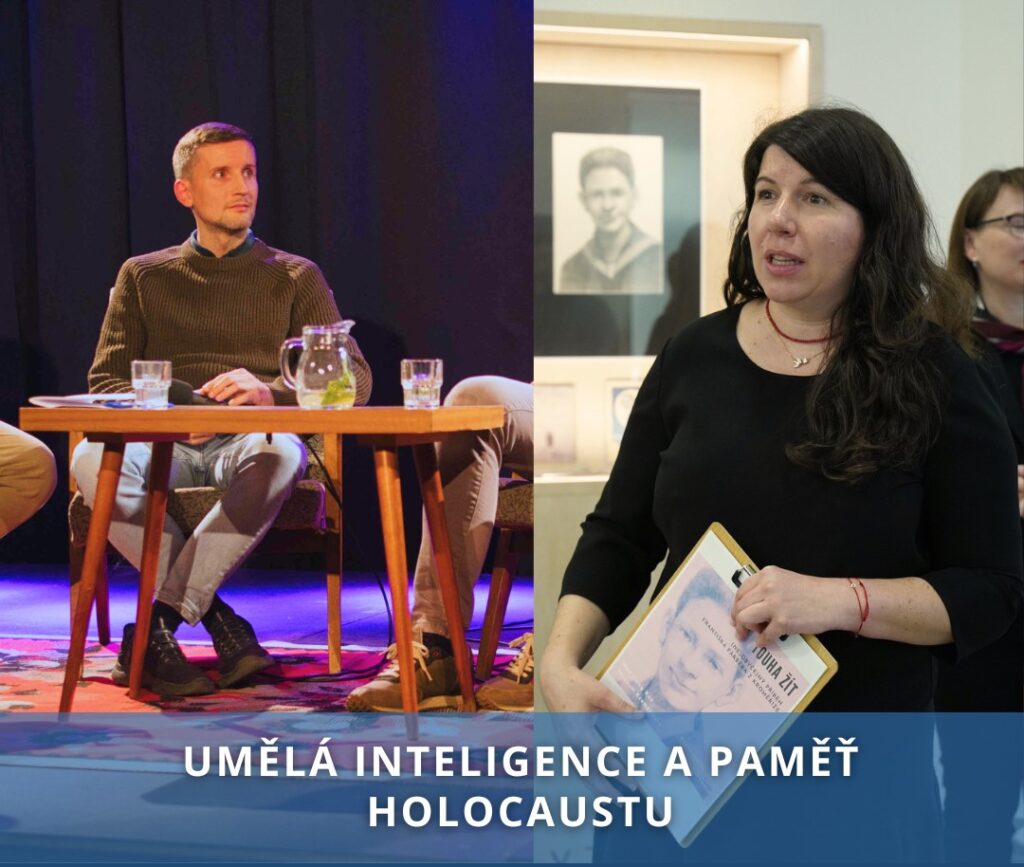
Philosopher and ethicist Štefan Oreško (Slovak Academy of Sciences) and historian Táňa Klementová will present the challenges that modern technology brings to museums and how to work sensitively with historical truth in the digital era. The debate is not only for technical enthusiasts. It is for anyone interested in how technology is changing our perception of truth, the past and human responsibility.
Guided tour with Martin Reiner
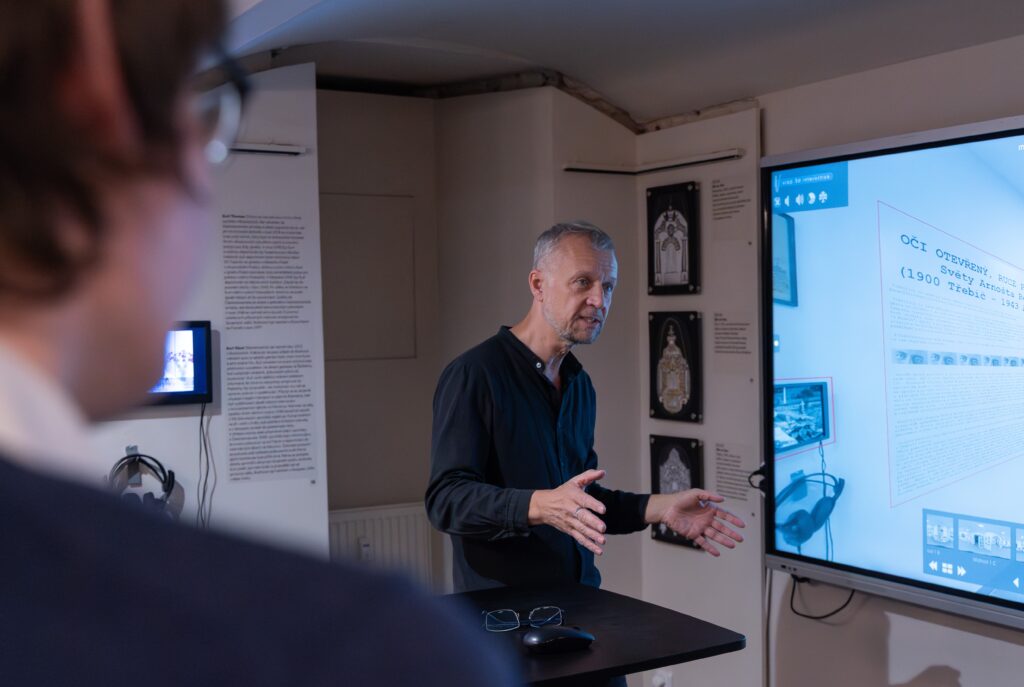
Guided tours of the exhibition spaces have already become an integral part of our programme offer. Individual speakers choose different forms and expand it with various interesting facts. This time Martin Reiner, Director of the Mehrin Foundation, will enrich the lecture with the presentation of the brochure Mehrin - Little Mehrin. Why these two titles, and what exactly is the content of this publication? Where is it available and for how much? Admission is voluntary.
Otte Wallish: From Znojmo to Tel Aviv
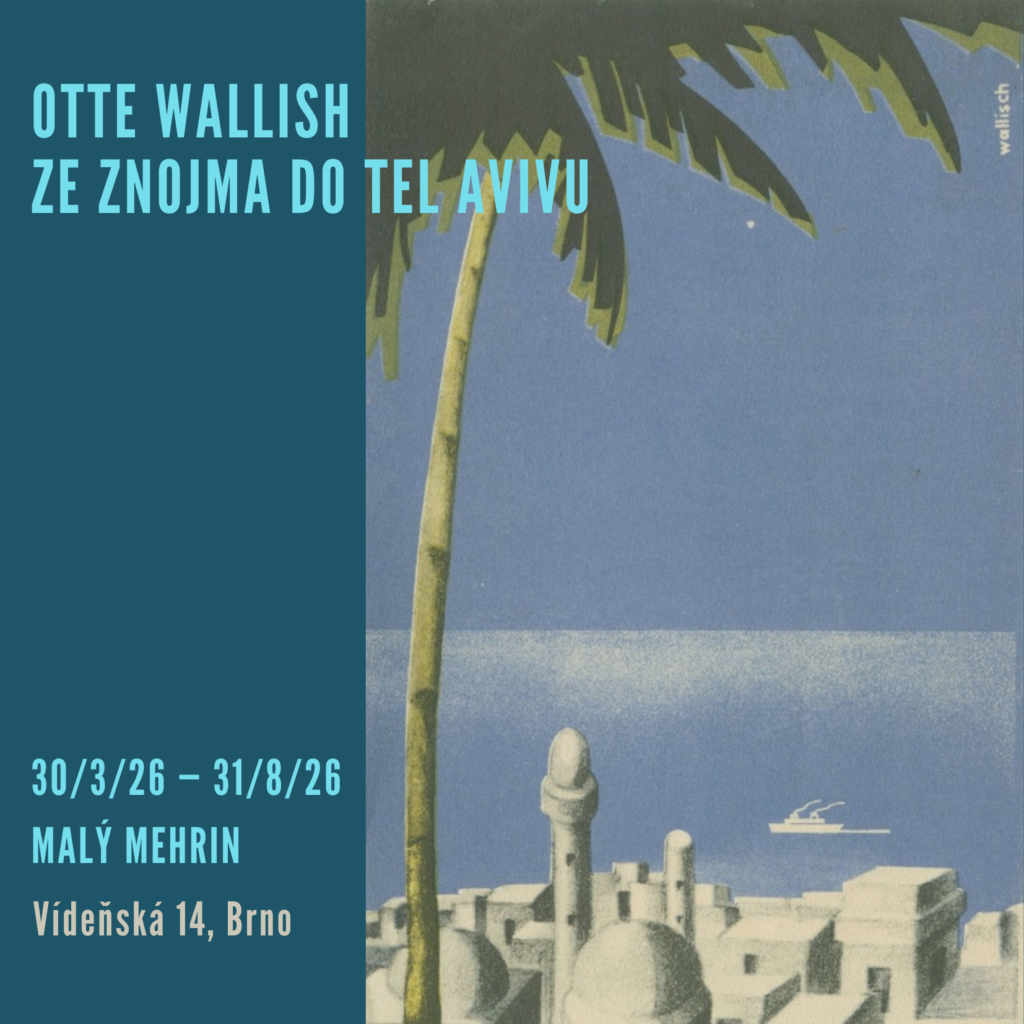
The exhibition Otte Wallish: From Znojmo to Tel Aviv by Eva Janáčová is symbolically presented by the Jewish Museum Malý Mehrin on the occasion of Otte Wallish's 120th birthday. Come and meet the artist who linked the modern avant-garde with the birth of a new state. You will see dozens of his posters, advertisements and designs that he created up to the 1970s. His work is not just art, it is a chronicle of an extraordinary journey.
The opening will take place on Monday, 30 March at 6 pm in the Little Mehrin.
White Places of Jewish Moravia and Slovakia
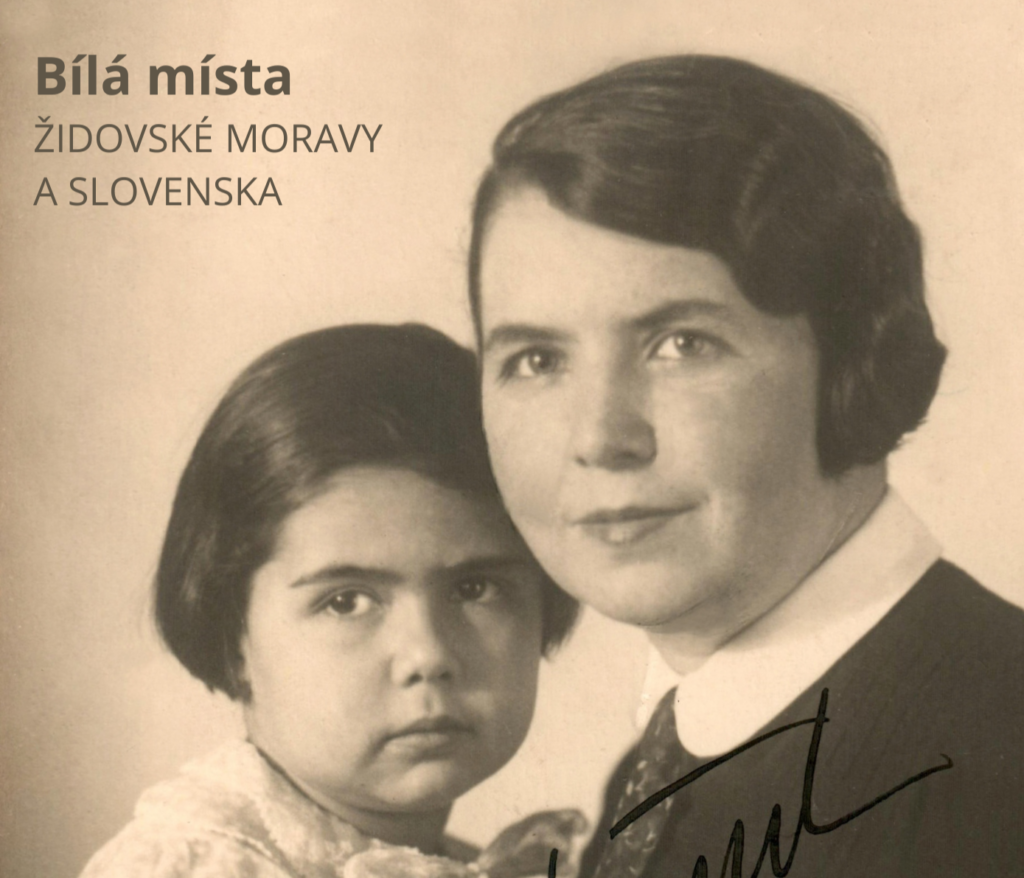
The third annual White Places conference brings back to common memory the stories of people, places and communities from Moravian and Slovak Jewish history. As preserved archival documents and oral sources show, the border between Moravia and Slovakia was never a sharp dividing line - on the contrary, it was a space of strong family, commercial and religious ties.
Hebrew with joy - discussion with Simona Pöder Innerhofer
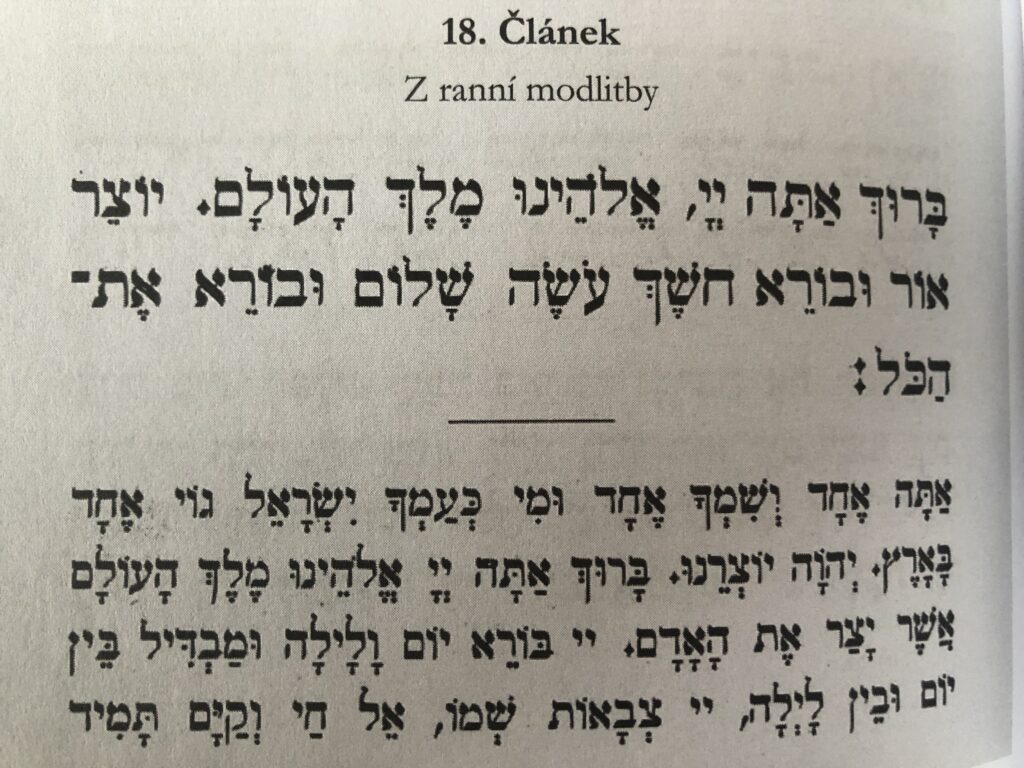
In this talk, we will introduce Hebrew from its written beginnings and touch on its entire development to the modern language. We will also focus on how Hebrew was used in Moravia - especially in the 19th and 20th centuries. We will take a closer look at the work of the physician Gideon Brecher, the Hebraist Moritz Steinschneider and the famous Chief Rabbi Richard Feder, who was born in Václavice near Benesov but worked in Brno for many years until his death.
Admission is voluntary.
Guided tour of the permanent exhibition
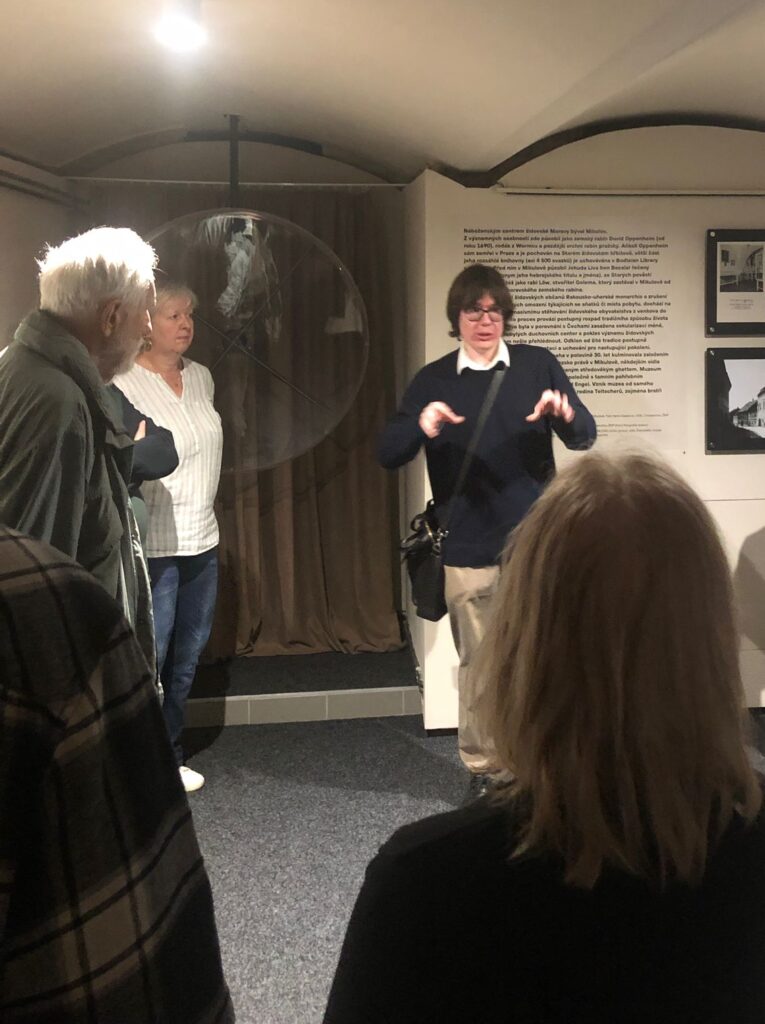
The March tour of the permanent exhibition with historian Jakub Kříž will focus on important, now somewhat forgotten, Jewish architects of the 19th and early 20th centuries whose work left a distinctive mark on the streets of the Moravian cities of Brno, Olomouc and Jihlava. Admission is voluntary.
White Places of Jewish Moravia and Slovakia 2026 - programme
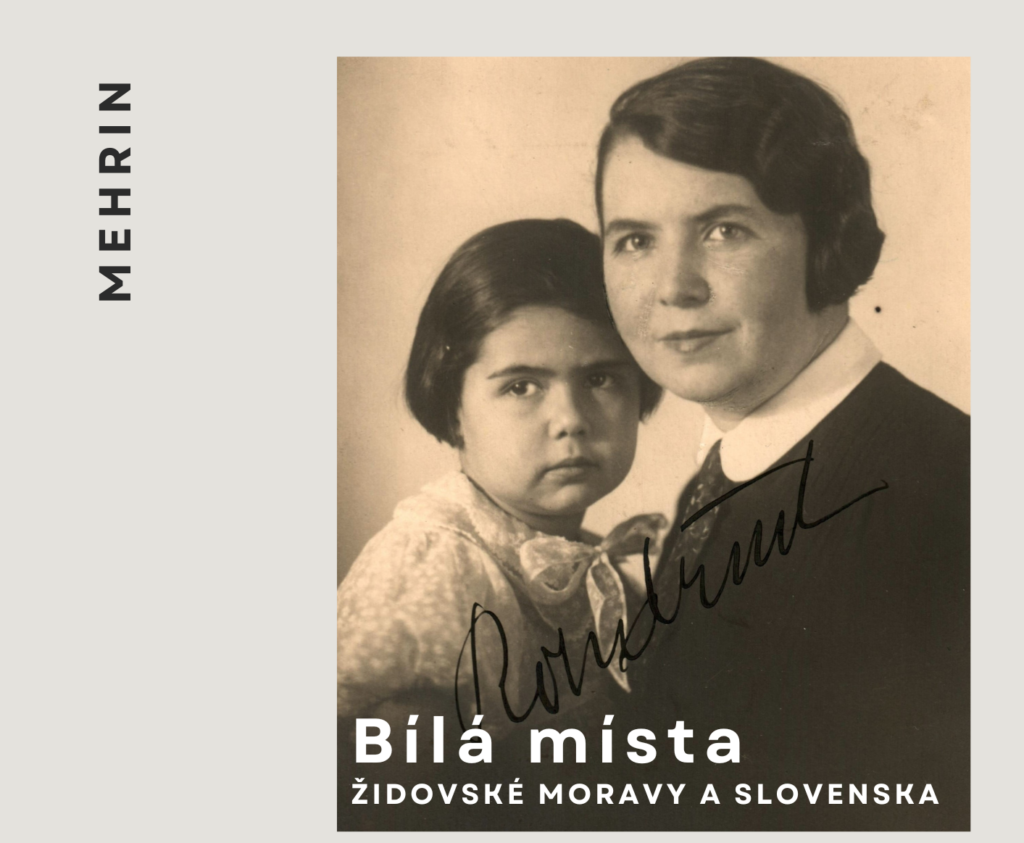
A full-day conference that is open not only to professionals but also to the general public. This year the papers will focus on Moravian-Slovak overlaps within the Jewish history of Moravia. Keynote speaker Maroš Borský will present the miraculous restoration of the Trenčín synagogue. This city is the European Capital of Culture for 2026. So do not hesitate to come!
Hieronymus Lorm (1821-1902) - the man who opened the world to the deafblind
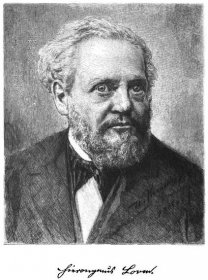
Hieronymus Lorm (1821-1902) - the man who opened the world to the deaf-blind Thursday 26 February at 6 pm. Hieronymus Lorm (1821-1902) - the man who opened the world to the deafblindThe lecture will focus on the life of Hieronymus Lorm, a native of the Jewish community of Mikulov. During his lifetime, he lost his hearing and gradually his sight. Despite this, he became a well-known writer, journalist and philosopher. He also went down in history as the author of the so-called Lorm's Alphabet. This system of communication based on hand gestures and touching is still used by the deafblind today. During the screening, we will also see the Lorma Touch Alphabet in practice, how it works and how it can be easily learned. This communication system has spread in various modifications all over the world and is still used today. Dana Vedra. She studied history and museology at the Faculty of Arts of Masaryk University. She works as a curator in the Historical Department of the Moravian Museum. Her research focuses on the history of Moravia in the 20th century, regional history of towns and villages, biographies of personalities. Since 2020, she has been intensively researching forced migrations with a focus on the Drahanská vrchovina region. She is a PhD student at the Institute of History, Faculty of Arts, Masaryk University. She is the author of many scientific studies, popular science articles and independent monographs. Admission is voluntary.
Vojtěch Kyncl: Neighbours at War
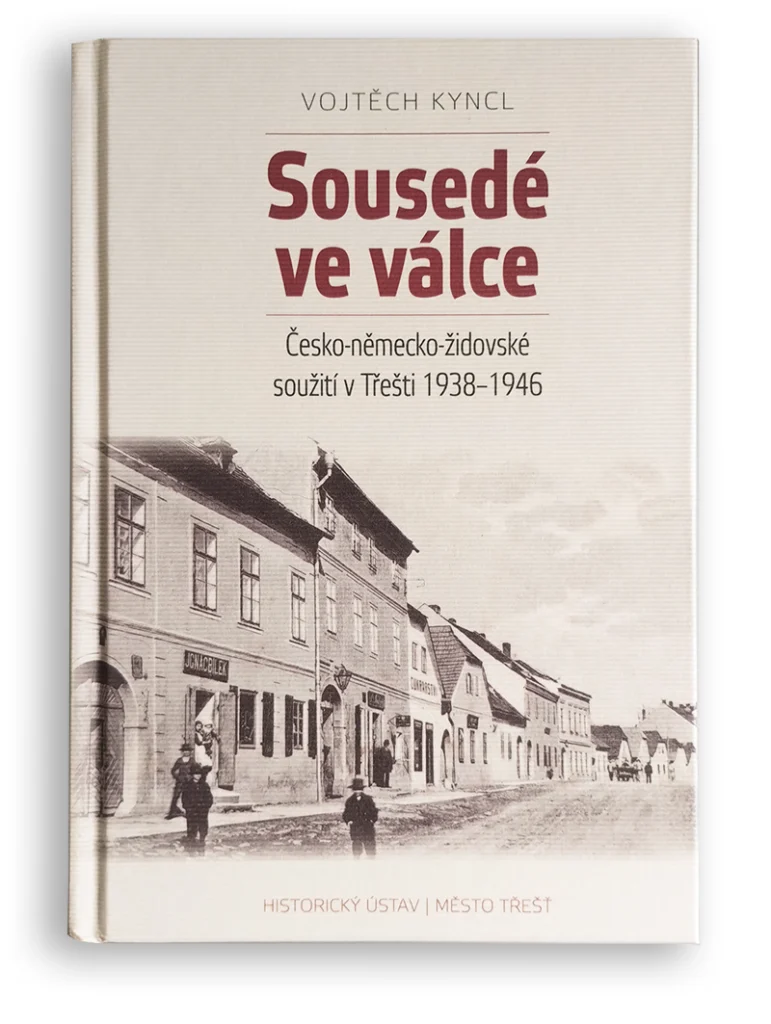
Vojtěch Kyncl: Neighbours at War Thursday 19 February at 6 p.m. Last year, the town of Třešt' together with historian Vojtěch Kyncl embarked on the project Neighbours at War. The result is an educational trail through the town, a museum and exhibition in the Prison Yard behind the town hall and, above all, a new book. It provides a detailed insight into what it was like to live in a small town where Czech, German and Jewish destinies intertwined for centuries, and where wartime events and ideologies managed to shatter this delicate balance within a few years. It shows how neighbourly relations were transformed under the pressure of the Nazi occupation, how the Jewish community was displaced and liquidated, how they collaborated with the occupying power, and how they resisted at home. It culminates in May 1945, when the town became the scene of a massacre of civilians and subsequent retaliation against the German population. During the evening, not only will the unique project in Třešt' be presented, but the debate will also touch upon the topic of the creation of memorials and their contemporary reception in Czech, and by extension Central European, society, and the search for new personal testimonies and archival sources. Come and discuss the joys and sorrows of the historian's journey of discovery directly with the author of the project, Vojtěch Kyncl, who has accepted our invitation. Admission is voluntary.
Guided tour of the permanent exhibition
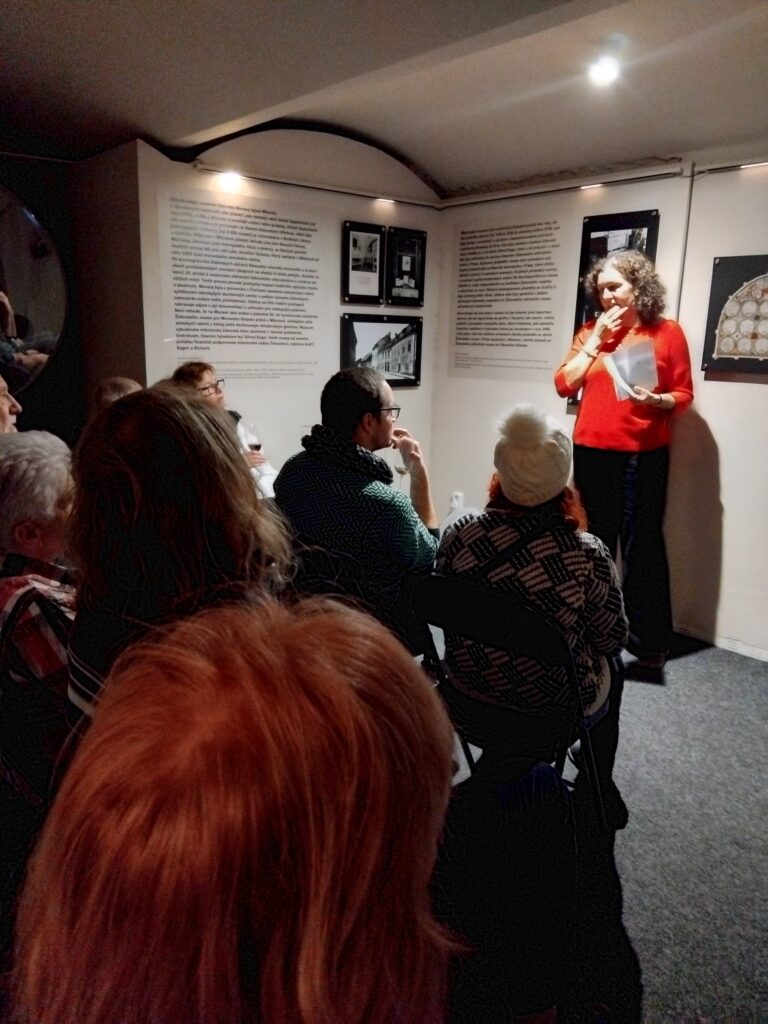
Guided tour of the permanent exhibition Wednesday 11 February at 5 pm. Guided tour of the permanent exhibition The February tour of the permanent exhibition will focus on contemporary forms of Judaism. For example, it will answer the questions: can a Hasid dine with a Reform Jew? And who is allowed to travel on Shabbat? Does an organ belong in a synagogue? About the different forms of Jewish faith in today's world with our lecturer Eva Kopečková. Admission is voluntary.